10 Rules for Smart Online Shopping: How to Save Money and Avoid Scams


📌 Key Takeaways
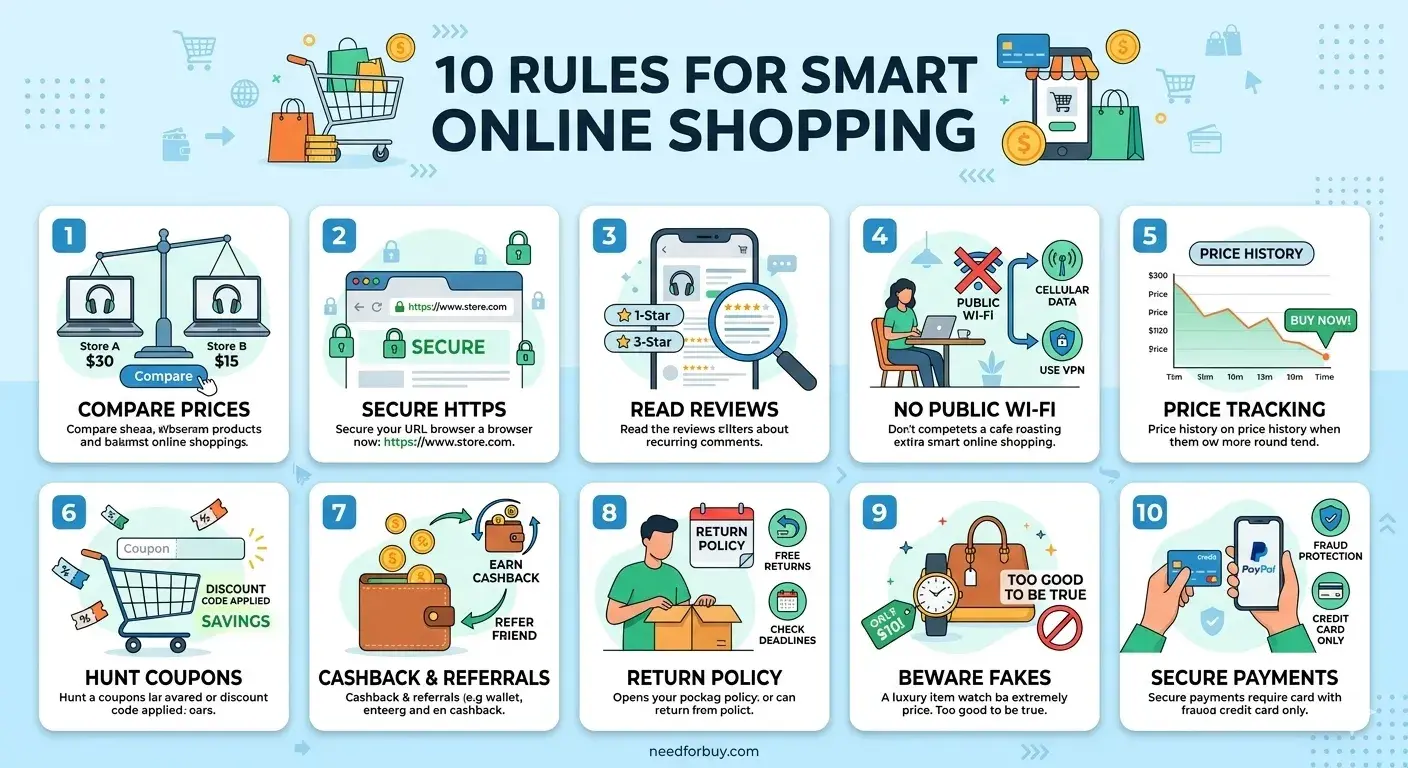
Let’s be honest: online shopping is a blessing. You can buy anything from a new mattress to a pack of dental floss while wearing your pajamas. But as convenient as it is, the digital marketplace is also full of traps. Overpricing, hidden fees, slow shipping, and outright scams can easily turn a fun retail therapy session into a massive headache.
If you want to keep your hard-earned money safe while grabbing the best deals, you need to play by a set of smart rules. Here are 10 essential rules for smart online shopping that every internet user should follow.
1. Always Compare Prices Across Platforms
Never buy an item from the first online store you see. Price discrepancies can be mind-blowing. The exact same unbranded product might cost $30 on one site and just $10 on another. Before hitting that check-out button, do a quick price check. For instance, if you are torn between two global giants, take a look at our detailed Amazon vs AliExpress comparison to see which platform fits your current budget and timeline better.
Don't Miss


2. Look for the “Padlock” (HTTPS) Before Buying
Before you type in your credit card details, look at the website’s URL bar. Does it have a little padlock icon? Does the URL start with https:// (the “S” stands for secure)? If it only says http://, your data is not encrypted, meaning hackers could potentially steal your payment info. Keep your security a priority and stick to secure networks.
3. Read the One-Star and Three-Star Reviews
Five-star reviews can easily be faked or bought. If you want the raw truth about a product, filter the reviews to see the 1-star and 3-star ratings. Look for recurring complaints. If ten different people say that a jacket runs two sizes too small or that a gadget broke after three days, you know exactly what to expect.
4. Never Shop on Public Wi-Fi Without a VPN
Shopping while sipping coffee at your favorite local cafe sounds relaxing, but open public Wi-Fi networks are a playground for cybercriminals. If you must buy something while away from home, switch to your cellular data or use a reliable Virtual Private Network (VPN) to encrypt your connection.
Ready to Save Big?
Explore our hand-picked deals and exclusive coupons today.
5. Use Price Tracking Tools
Did you know that prices on sites like Amazon change multiple times a day? Retailers often inflate prices right before a big sale (like Black Friday) to make a discount look bigger than it actually is. Use free external tracking tools like CamelCamelCamel or Keepa to see the true price history of an item and buy when it’s genuinely at its lowest.
6. Hunt for Coupon Codes Dynamically
Never leave the “Promo Code” box empty at checkout without a fight. Before paying, open a new tab and search for the store’s name plus “coupon code.” Better yet, install browser extensions like Honey or Capital One Shopping that automatically find and apply the best working discounts for you at checkout.
7. Capitalize on Cashback and Referral Systems
If you aren’t using cashback, you are literally leaving free money on the table. Many platforms offer percentages of your money back just for clicking through their links. If you want to dive deeper into how these revenue models work or want to earn money by recommending your favorite products to others, explore the world of partner programs.
8. Understand the Return Policy (The Fine Print)
What happens if the shoes don’t fit or the item arrives broken? A great price means nothing if a company forces you to pay $20 in return shipping fees to get a refund. Always check two things before buying:
- How many days do you have to return the item?
- Is the return shipping free, or do you have to cover it yourself?
9. Beware of Deals That Seem Too Good to Be True
If you see an ad on social media offering a brand-new PlayStation 5 or a luxury designer handbag for $49, run away. It is either a counterfeit item, a phishing attempt to steal your identity, or a scam store that will take your money and vanish into thin air. Trust your gut—if a deal feels suspiciously cheap, it probably is.
10. Use Secure Payment Methods
Whenever possible, pay with a credit card or a trusted third-party processor like PayPal instead of a debit card. Credit cards offer much stronger fraud protection. If a store turns out to be a scam, your credit card company can initiate a chargeback and return your money. If a debit card gets compromised, scammers are draining actual cash directly from your bank account.
Conclusion
Smart online shopping isn’t about restriction; it’s about empowerment. By taking just two extra minutes to check reviews, compare prices, and verify security, you can protect your bank account and make sure every package that arrives at your door is exactly what you wanted. Happy and safe shopping!
Frequently Asked Questions
Is it safe to buy from AliExpress?
How can I save more on Amazon?
Get the Best Deals First
Join our newsletter and never miss a hot discount or a smart guide again.
You May Also Like

How to Shop Online Smarter in 2026: Complete Beginner’s Guide
Your Guide to Shopping Safely: How to Recognize Fake Reviews and Choose an Honest Seller

The Future is Now: How you can shop almost instantly